LEGO Investment Guide 2026: Real Returns, After-Fees Reality, and Which Themes Win
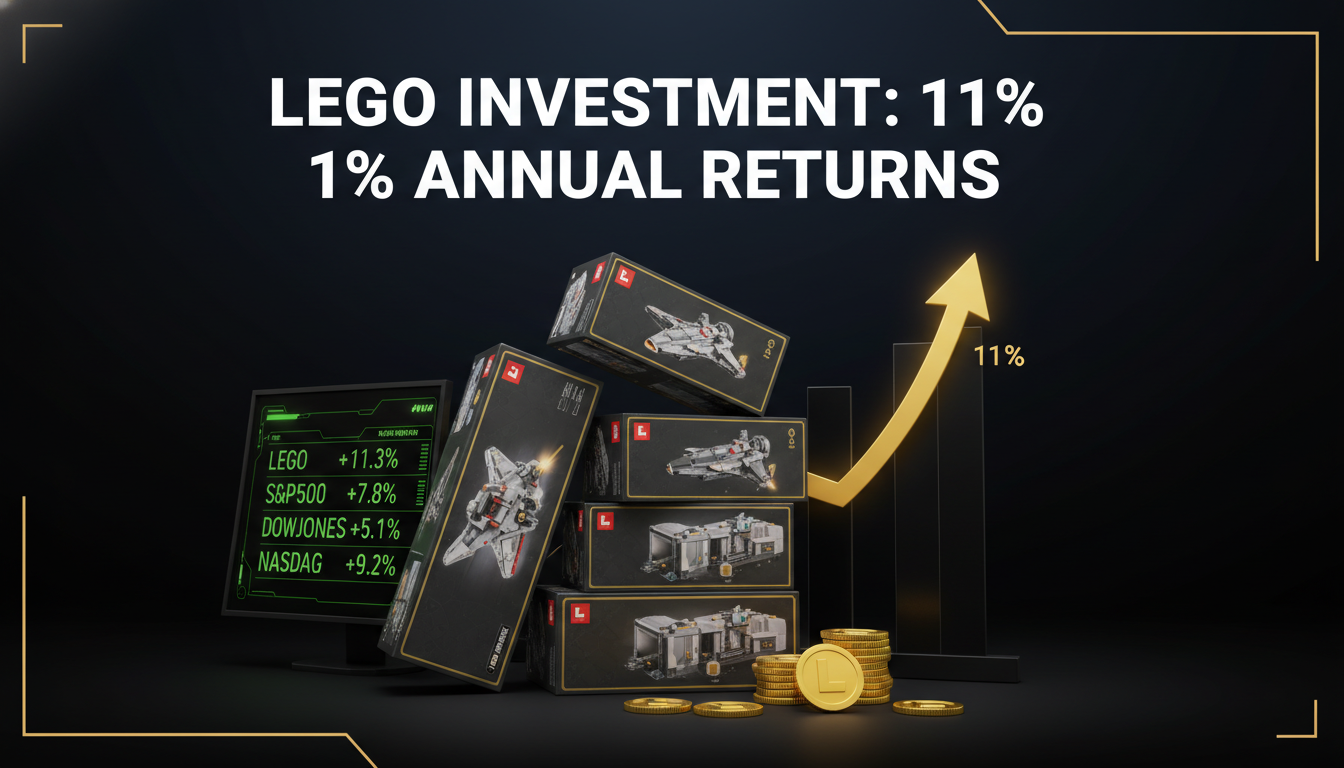
The headline that gets repeated everywhere: LEGO returns 11% annually, outperforming the S&P 500, gold, and bonds. That headline is accurate. It comes from the Higher School of Economics 2022 study — a peer-reviewed analysis of 2,322 retired LEGO sets tracked on the secondary market between 1987 and 2015, published in the International Review of Financial Analysis and covered by The Guardian, Yahoo Finance, and academic outlets worldwide.
What gets skipped: that 11% is a gross figure before selling costs. eBay charges sellers 13% of the total sale price including shipping. PayPal processing adds another 2-3%. Shipping a sealed set costs $10-18 in materials and postage depending on size. On a $100 exit price, you give back $15-19 in platform and shipping costs before pocketing anything.
After fees, the average LEGO investor targeting mid-tier sets (retail $60-150) nets 6-9% annually on a well-executed 5-7 year hold. That still beats savings accounts, beats most bonds, and competes with dividend-paying equities. But it is meaningfully below 11%, and the difference determines whether storage friction and illiquidity are worth the trade.
This guide works through the real data, the after-fee math, the nine theme tiers that determine most of your outcome, what investment-grade LEGO actually looks like, the 2025-2026 market context, and the honest answer to whether LEGO investment is still worth pursuing in 2026.
What the HSE 2022 study actually says
The Higher School of Economics study analyzed 2,322 sets retired between 1987 and 2015. The dataset used BrickLink and BrickPicker sold-listings — actual transaction prices, not asking prices. Key findings:
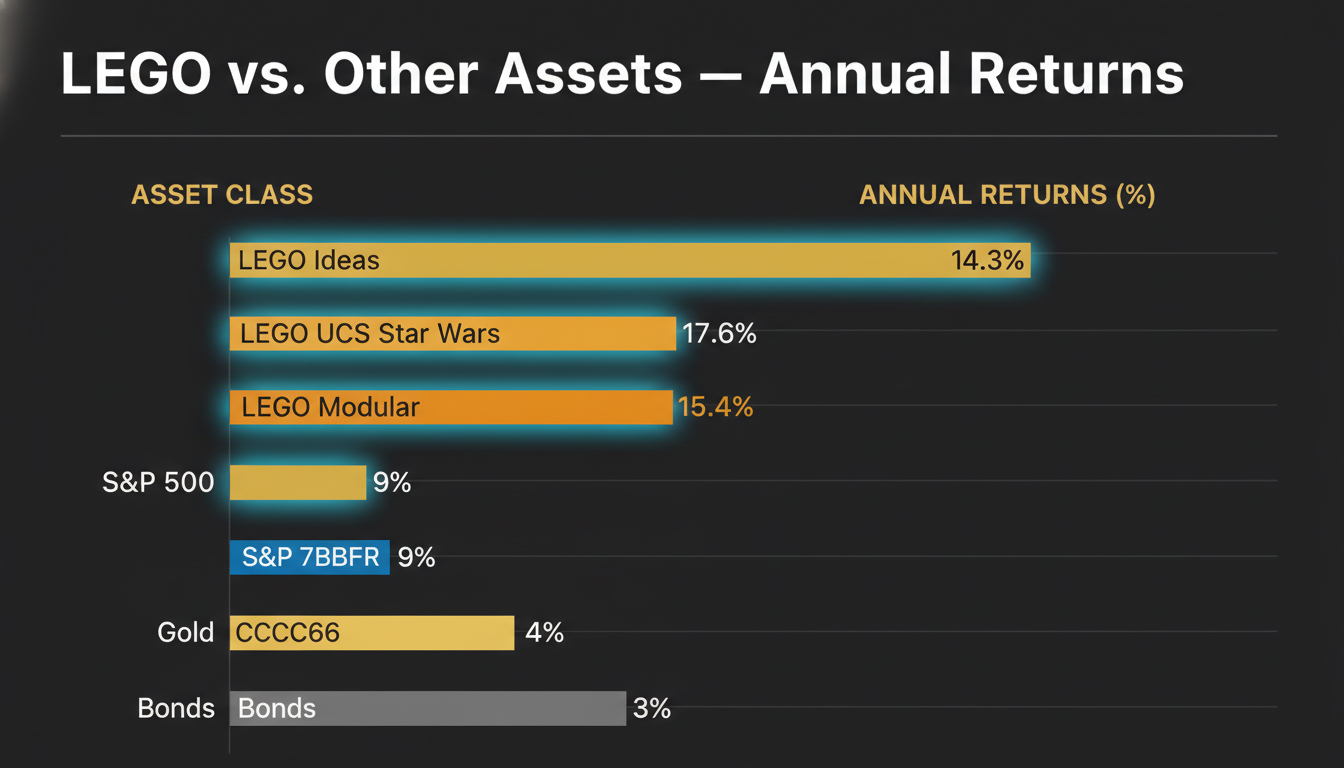
Average nominal annual return: 11% across all studied sets
Real (inflation-adjusted) return: 8% per year
Vs. S&P 500: 10.5% nominal over the same period
Vs. gold: 6.5% nominal
Vs. bonds: 4% nominal
The Sharpe ratio — return per unit of volatility — favored LEGO over all major asset classes in the study sample
A second academic study published through Emerald journals expanded the sample to 10,588 sets across a longer timeframe and reached consistent conclusions. Both studies found that retired LEGO generates better risk-adjusted returns than most mainstream alternatives, with a specific advantage in lower price volatility compared to equities: retired-set scarcity is a slow physical constraint, not a sentiment reaction to quarterly earnings.
Why does retired LEGO appreciate at all? The mechanism is straightforward. LEGO produces numbered sets for a defined window of 1-3 years, then permanently retires them. Once production stops, supply is fixed forever. New LEGO fans enter the hobby every year — the adult collector segment tripled between 2015 and 2024 by most estimates. Fixed supply plus rising demand drives price up. Three forces compound this: most buyers open their sets, permanently removing them from the sealed market. Cardboard degrades over years. And some themes cycle back into cultural relevance (a Star Wars retirement year aligns with a new film release, for instance), creating demand spikes that outpace the gradual appreciation baseline.
This is a different mechanism from stocks (earnings growth) or gold (monetary hedging). It is pure scarcity arithmetic, modified by fashion cycles.
LEGO vs. other asset classes in 2026
| Asset | Nominal Annual Return | Liquidity | Custody Cost |
|---|---|---|---|
| LEGO top-tier themes | 14-18% gross | Low: 2-6 weeks to exit | Storage + 15-16% platform fees |
| LEGO all-themes average | 11% gross | Low | Storage + 15-16% platform fees |
| S&P 500 index fund | 9-10% long-run | Instant | None |
| Real estate (residential) | 8-12% | Very low | Maintenance, taxes, insurance |
| Gold ETF | 6-7% | Instant | Fund expense ratio only |
| 10-year Treasury bonds | 4-5% | Medium | None |
| High-yield savings (2024-2025) | 4-5% | Instant | None |
The comparison is not simple. LEGO's raw return advantage over index funds is 1-8 percentage points depending on theme tier — but that advantage comes with worse liquidity, physical storage requirements, and platform fee friction. A $10,000 LEGO portfolio locked up for 6 years, generating 11% gross and 8.5% net, outperforms the same $10,000 in an index fund at 9.5% — but only if the LEGO investor executes correctly: right themes, sealed condition, patience.
For someone who finds the hobby genuinely interesting regardless, the return premium is real and worth pursuing. For someone treating it purely as a financial instrument with no interest in the hobby, index funds at 9% with daily liquidity and zero storage cost are the more rational choice. LEGO investing has a "carry cost" in operational friction that index investing does not.
The nine theme tier multipliers
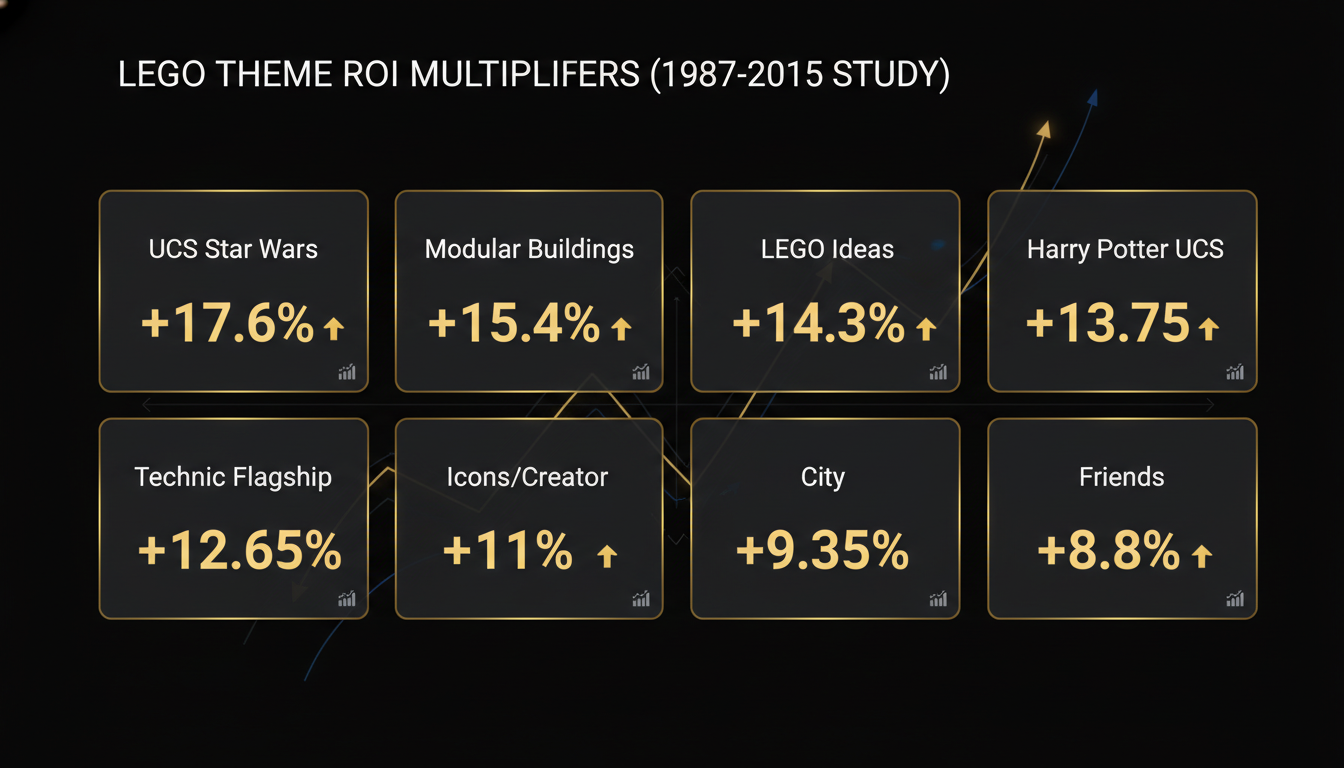
Theme selection determines 60-70% of any individual set's outcome. The tier multipliers below are derived from the HSE 2022 data combined with post-2015 BrickEconomy trend analysis:
| Theme Tier | Annualized Post-Retirement Return |
|---|---|
| UCS Star Wars | 17.6% |
| Modular Buildings | 15.4% |
| LEGO Ideas | 14.3% |
| Harry Potter UCS | 13.75% |
| Technic Flagship | 12.65% |
| Icons / Creator Expert | 11.0% |
| City | 9.35% |
| Friends | 8.8% |
| Other licensed | 7-9% variable |
UCS Star Wars leads because the license has a multi-decade collector base that does not age out; flagship UCS sets are large enough (5,000-9,000+ pieces) that counterfeiting and reproduction are impractical; and Star Wars cultural relevance cycles every few years with new content, regenerating buyer demand repeatedly. The Millennium Falcon (75192, $849 retail) was trading at approximately $1,100-1,200 sealed in early 2026. The UCS Imperial Star Destroyer (75252, $699 retail) reached similar premiums by 2024.
Modular Buildings have the most consistent year-over-year record. The Downtown Diner (10260) passed double its retail price on sealed listings. The Assembly Square (10255) was well above $500 sealed by 2024 against a $279.99 retail price. These sets attract two distinct demand pools simultaneously: pure LEGO collectors and interior-display buyers who want the aesthetic without the LEGO hobby attachment.
LEGO Ideas benefits from the community-vote mechanic. Every Ideas set was requested by fans before LEGO greenlit it, which means a committed collector base already exists before the set ships. Historical examples: NASA Apollo Saturn V (92176) tripled from $119.99 retail; Ship in a Bottle (21313) went from $69.99 to over $200; Treehouse (21318) has passed $400 from $199.99 retail.
The lower tiers are not bad investments — Friends at 8.8% annually still beats a savings account. But they require longer hold periods to generate the same exit multiple, and they attract narrower buyer pools, which means slower exits, more time-on-market, and more exposure to condition degradation during extended hold periods.
The after-fees math — worked examples
This is the calculation most LEGO investment content either skips or glosses over.
Example A: LEGO Ideas set at $79.99
Purchase price (retail, sealed): $79.99
Theme tier: LEGO Ideas, 14.3% annualized post-retirement
Hold period: 6 years post-retirement
Year 6 projected value: $79.99 x (1.143)^6 = approximately $183
eBay fee (13% of $183): $23.79
PayPal processing (2.9% of $183): $5.31
Shipping materials + postage: $14
Total platform and shipping costs: $43.10
Net proceeds: $140
Net annualized return: approximately 9.8%
Still strong — 9.8% net competes with S&P 500 long-run averages. But it is 4.5 percentage points below the stated 14.3% theme tier. That gap is the fee haircut.
Example B: UCS Star Wars set at $499.99
Purchase price (retail, sealed): $499.99
Theme tier: UCS Star Wars, 17.6% annualized post-retirement
Hold period: 7 years post-retirement
Year 7 projected value: $499.99 x (1.176)^7 = approximately $1,555
eBay fee (13% of $1,555): $202.15
PayPal processing (2.9% of $1,555): $45.10
Shipping materials + postage for large set: $22
Total costs: $269.25
Net proceeds: $1,285.75
Net annualized return: approximately 14.4%
On the high-value UCS set, fees consume approximately 3 percentage points of the 17.6% gross return instead of 4.5 points, because shipping is a mostly-fixed cost that becomes proportionally smaller as set value grows. This is the structural reason why large, high-retail-price sets in the top tiers are the most efficient LEGO investments by net return.
The $60 minimum rule: On sets with retail under $60, fee friction is so severe that even 6-year holds in high-tier themes generate under 4% net annually. The math does not work. Minimum viable LEGO investment entry point is roughly $60-79.99 for Ideas and Creator sets, or $499+ for UCS flagship sets.
What investment-grade LEGO looks like
Four criteria separate investment-grade sets from everything else:
1. Theme tier in the top four. UCS Star Wars, Modular Buildings, LEGO Ideas, or Harry Potter UCS. Below those tiers, the fee friction is not worth the trade versus simpler alternatives.
2. Retail price $60-$850. Below $60 fees eat too much. Above $850 (approaching $1,000), buyer pools are small enough that liquidity risk starts to matter.
3. Limited distribution channel. Sets sold exclusively through LEGO.com and official LEGO stores do not end up in TJ Maxx bins years after retirement. When they retire, supply actually stops. Sets with mass-market retail distribution (Target, Walmart, Amazon) tend to have longer "ghost supply" tails that slow early post-retirement appreciation.
4. No active secondary-market premium yet. The ideal entry is retail price before any secondary premium develops. Once a set is trading above retail on sealed listings, you are paying someone else's expected future gain upfront. Sets that have already developed premiums still appreciate after retirement, but your ROI is calculated from your higher entry basis.
The 2025-2026 market reality
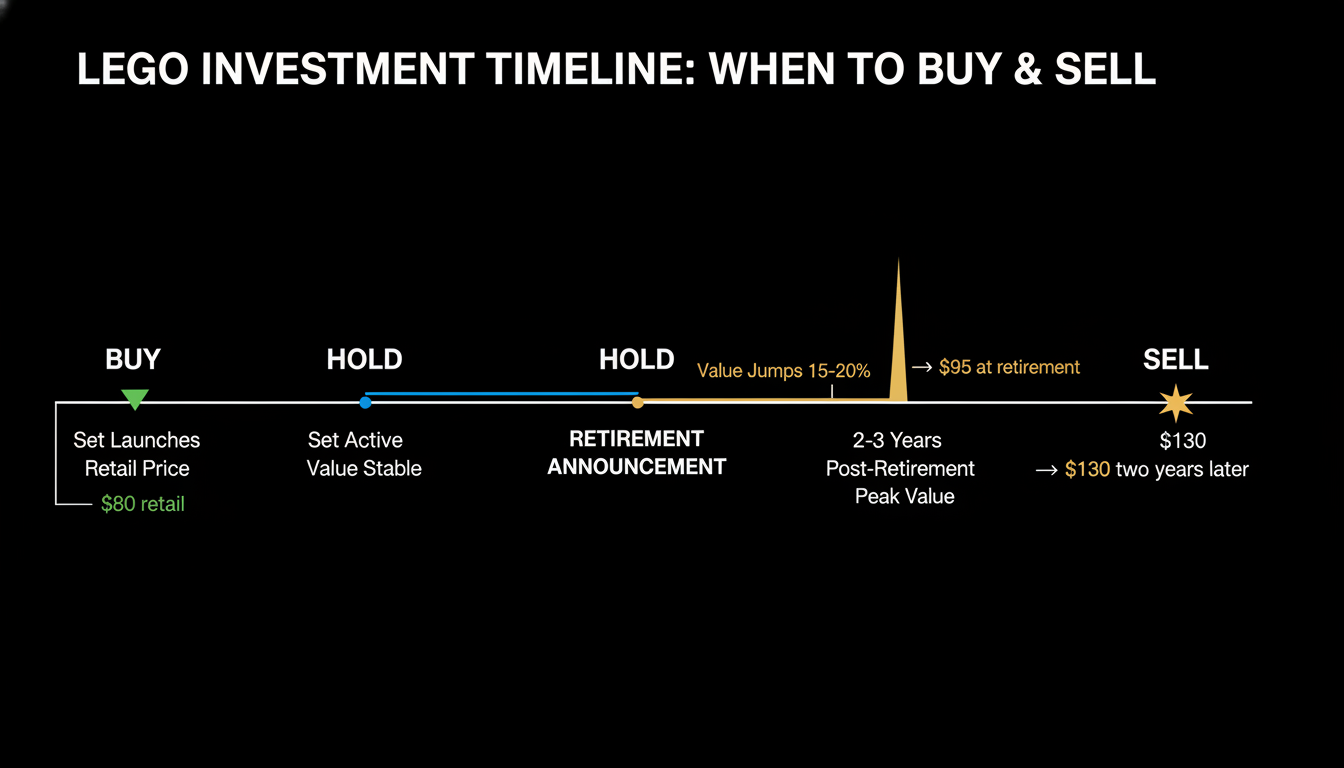
Community data from 2025-2026 shows a bifurcated market.
Top-tier sets continue to perform. UCS Star Wars and Modular Buildings have tracked in line with historical tier multipliers through 2025-2026. The Millennium Falcon (75192) at $1,100-1,200 sealed against $849 retail is exactly where the model predicts. Rivendell (10316) at $650+ against $499 retail is ahead of schedule. The top two tiers are functioning exactly as expected.
Mid-tier commodity LEGO has compressed. The "buy City sets before retirement and flip them two years later" play has narrowed significantly since 2020. The market now contains more informed investors chasing the same retirement-window trades. Mid-tier sets bought at retail today generate lower returns than equivalent sets bought a decade ago. The broad market average has likely drifted from 11% toward 8-9% in the post-2020 period.
One documented 2026 community portfolio tracker reported 29.56% ROI on a $6,893 LEGO base over 24 weeks — exceptional performance that required active monitoring, strict theme-tier selection, and favorable retirement-window timing. That is the upper range of what is achievable with active management; it is not the passive-hold average.
The target range for a well-constructed LEGO investment portfolio in 2026, held 5-10 years, focused on top-four theme tiers, bought at retail: 9-12% net annually after fees. That is the realistic expectation.
Four failure modes that wreck returns
The failure modes are predictable and consistent across all community tracking data:
1. Opening the box. Sealed to opened is a 30-50% permanent value drop. Every time, without exception. If you open a set you intended to hold for investment, reclassify it as a display piece and remove it from your return calculations.
2. Wrong theme tier. Jurassic World, Minecraft, Ninjago — legitimate sets, genuinely appreciated themes, poor investment vehicles compared to the top four tiers. The tier multiplier difference between UCS Star Wars and a mid-licensed theme over a 6-year hold compounds into a 2-3x difference in absolute gain.
3. Hold period under 3 years. Most retired sets underperform in years 1-2 post-retirement. The supply tightening that drives appreciation is slow. Early exits miss the 3-7 year inflection where early-movers have sold, supply has genuinely thinned, and price discovery pushes values materially above early post-retirement levels.
4. Buying opened or used. Secondary-market opened sets have already had their 30-50% seal premium extracted by the first owner. Buying opened sets and expecting sealed appreciation curves is a category error. Investment-grade LEGO is sealed-box only.
The bottom line for 2026
LEGO investment works — in specific conditions. The HSE 2022 study's 11% figure is real, but it describes the full distribution of 2,322 sets held correctly and sold at reasonable timing. Your practical outcome depends on theme tier selection (top four tiers: 12-18% gross), hold period (5-10 years), condition discipline (sealed, climate-controlled), and after-fee math (subtract 3-5 percentage points from gross figures for platform and shipping costs).
Net of fees on well-selected top-tier sets held 5-7 years: 9-14% annualized. That is competitive with equity index funds on total return, with worse liquidity, more operational overhead, and more required patience. Whether that tradeoff is worth it depends on whether you find the hobby component inherently engaging. If yes, the friction is entertainment. If no, index funds are more rational.
To project returns on a specific set you are considering, use the [LEGO Investment Calculator](/tools/investment-calculator). For a getting-started playbook — prerequisites, portfolio composition, and the six mistakes to avoid — see [LEGO Investing 101](/blog/lego-investing-getting-started). For specific 2026 set recommendations, see [Best LEGO Sets to Invest in 2026](/blog/best-lego-sets-to-invest-in-2026).